When dental practices think about growth, the focus is usually on bringing in more patients. Marketing, referrals, new services. All important, but there is another part of the practice that has just as much impact on revenue and often gets overlooked. The phones.
Every day, patients are calling in ready to book. Some of those calls turn into appointments. Many do not. Until recently, there has been no easy way to really understand why. Most dental phone systems are built to route calls or record them, but very few help you understand what is actually happening during those conversations.
As a practice owner, you might have a general sense that calls are not converting as well as they should. Perhaps you suspect that certain team members have stronger skill sets when it comes to communicating on the phone, but without clear data, it is difficult to pinpoint the issue or know how to fix it. Oftentimes, we have found that this is why coaching front desk teams can feel frustrating. Most dentists and office managers do not have time to listen to hours of call recordings. Feedback becomes subjective, and it is hard to give someone clear direction on how to improve when you cannot see the full picture.
Newton’s AI Call Analytics Feature
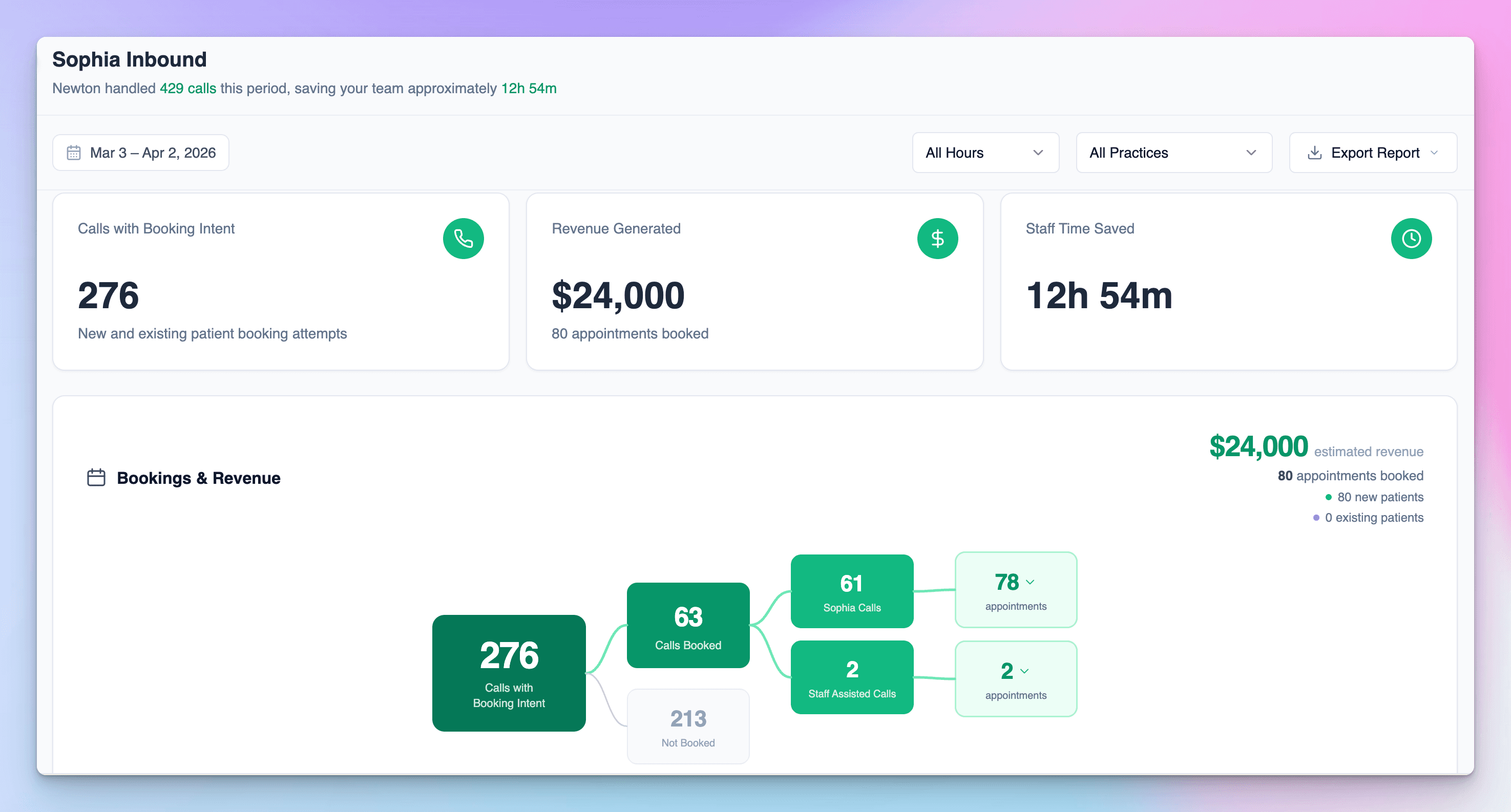
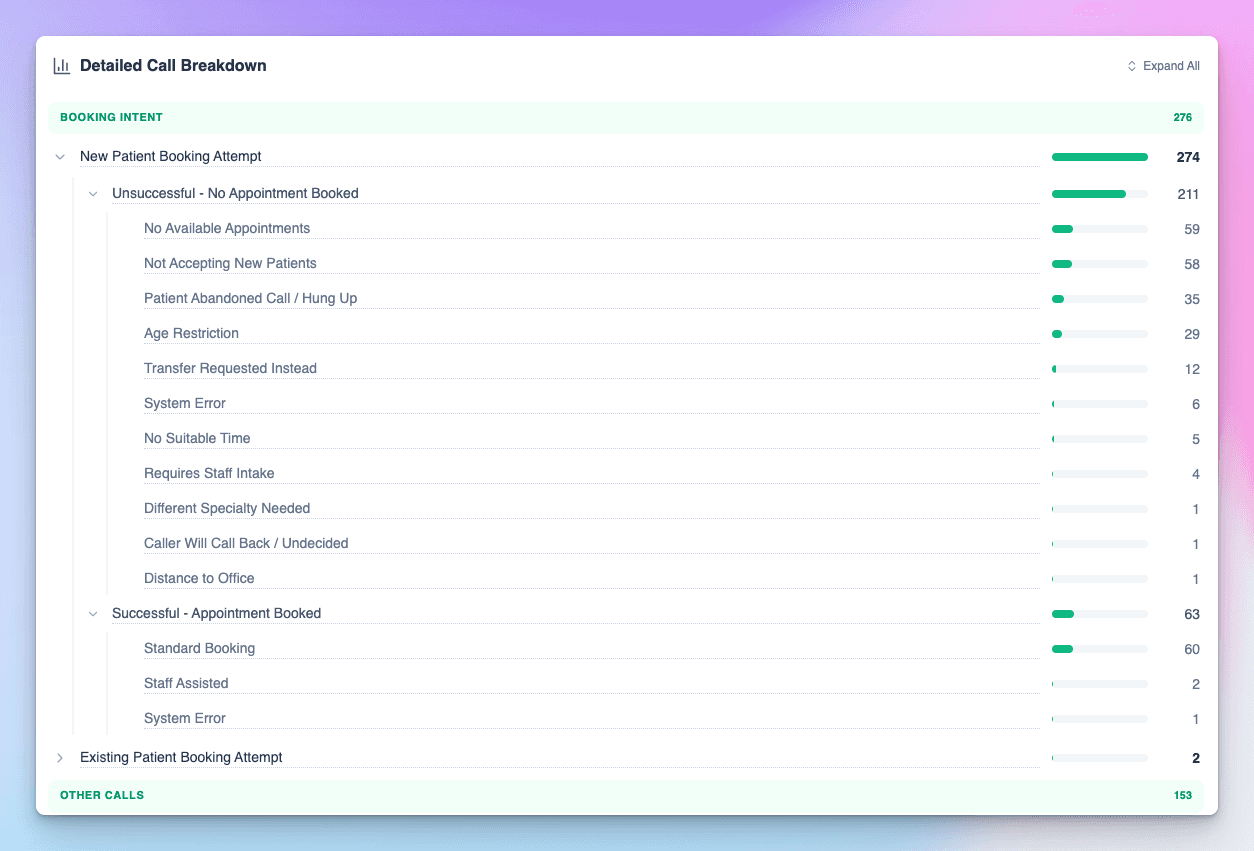
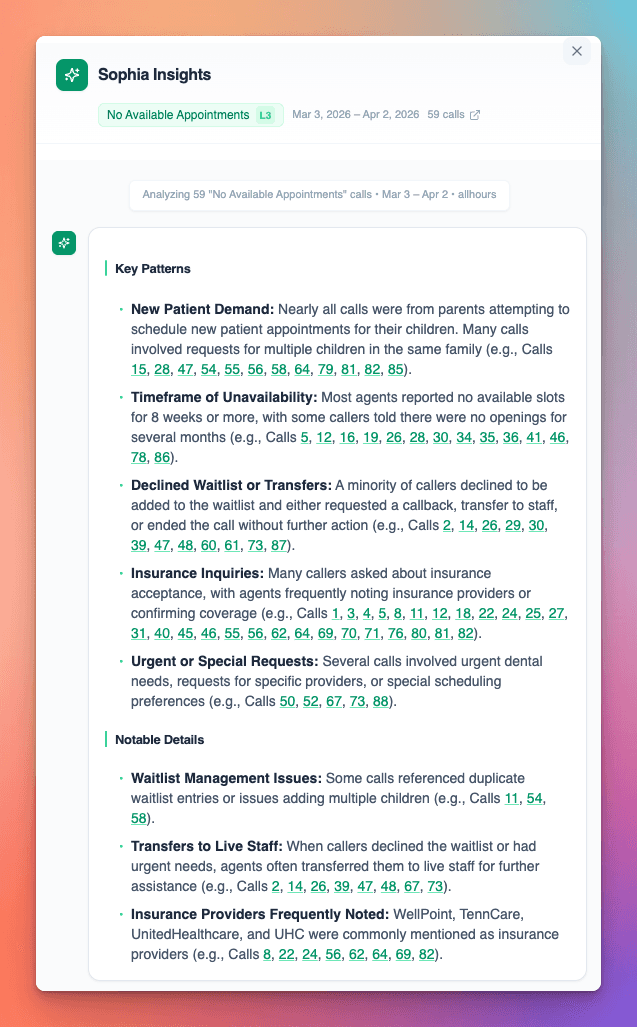
As a solution to this problem, Newton has introduced AI call analytics as a new feature designed specifically for dental practices. Instead of simply recording calls, Newton analyzes them. It looks at patterns across conversations and surfaces insights that would be nearly impossible to catch manually. This includes how calls are being handled, where patients are dropping off, and what tends to lead to a successful booking. AI call analytics in dentistry is still a very new area, and Newton is one of the first to bring this level of visibility into everyday front desk operations. With this new feature, you can click through to specific subsets of calls, and listen to them, in addition to getting Sophia’s insights and analysis on what’s happening.
Once you can see patterns across calls, things start to become clearer. You can begin to understand whether patients are being guided effectively into appointments or if opportunities are being missed. You can see whether conversations feel rushed or transactional, or whether there is an effort to build rapport. This allows for changes in how your teams can be better supported and coached, while focusing on specific trends and moments over time. In fact, studies have consistently shown that constructive, data-driven feedback is “highly useful for knowledge acquisition and can function as a constructive reward” (Jansen, Höft, Bahr, Kucklik, Meyer, 2023). This tends to create a more constructive working environment, where staff are not left guessing what they should be doing differently, and coaching feels more grounded and consistent. Over time, these small details add up, and they often make the difference between a booked patient and a lost one.
Built for Better Efficiency in Practices
It is important to note that not every gap in performance comes down to the individual answering the phone, and not every problem is a people problem. Oftentimes, it is a process problem.
Sometimes the issue is tied to scheduling policies, how availability is communicated, or how certain types of questions are handled. In other cases, it may be related to how insurance inquiries are addressed or how new patients are positioned. With Newton’s call analytics feature, practices can look across locations and team members to identify where patterns are emerging, which ultimately makes it easier to separate one-off issues from broader, more consistent operational challenges.
Newton is helping introduce a new way of thinking about the phones, not just as a tool for answering calls, but as a source of insight into patient behavior, team performance, and missed opportunities. Instead of spending time searching for gaps and problems within your system, Newton handles the busy work in the background and surfaces what matters so that you can focus on improving them.